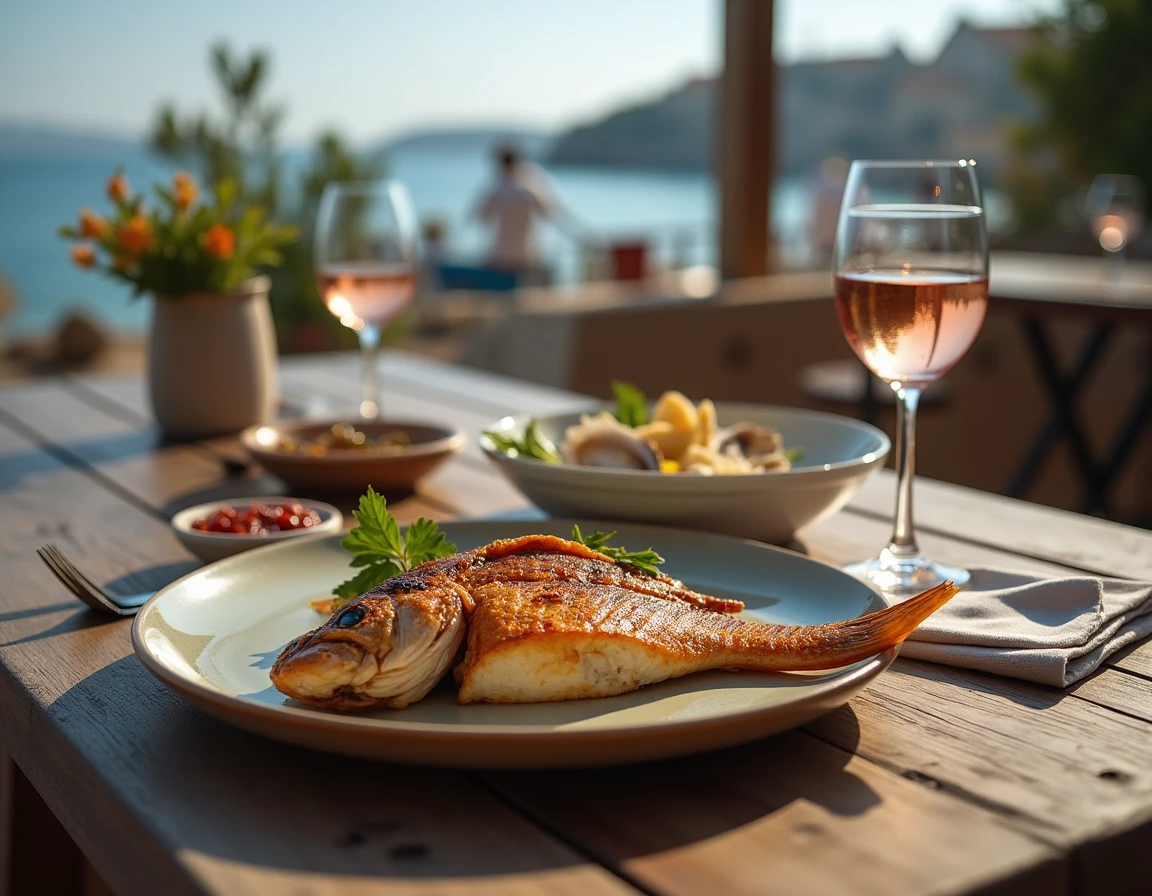
Gruissan concentrates a rare density of raw products within a limited area on the Aude coastline: fish from the lagoon, shellfish from the oyster parks, hand-harvested salt from the salt flats, and wines from the Clape massif with AOC designation. This interplay between lagoon, sea, and garrigue directly influences the restaurant landscape and the quality of the dishes.
Salt from the salt flats and lagoon fish: the products that shape Gruissan cuisine
The immediate proximity of the salt flats on Saint-Martin Island provides raw, unrefined salt, whose mineral content significantly alters the salting and seasoning processes. Local restaurateurs who source directly use it both in cooking and as a finishing touch at the table, on grilled fish or field vegetables.
The Gruissan lagoon produces eels, sea bass, and wild dorade caught in nets. These lagoon fish have firmer flesh and a more pronounced flavor than their farmed counterparts. Serious tables in Gruissan prepare them whole, grilled, or in a salt crust, without masking the product’s flavor.
On the wine front, the Clape massif benefits from a specific AOC. The whites, made from bourboulenc, exhibit a salinity and tension that make them particularly suited for pairing with shellfish and fish. We recommend prioritizing the parcel wines offered by the glass in the village’s restaurants, rather than the entry-level bottles often served by the beach.
Among the establishments that highlight this connection between local products and quality cuisine, you can find those listed on https://www.lacigaleetlafourchette.fr/, a useful resource for identifying restaurants committed to local sourcing in the region.
Côte et Plage and Casa Marina: two types of restaurants to distinguish
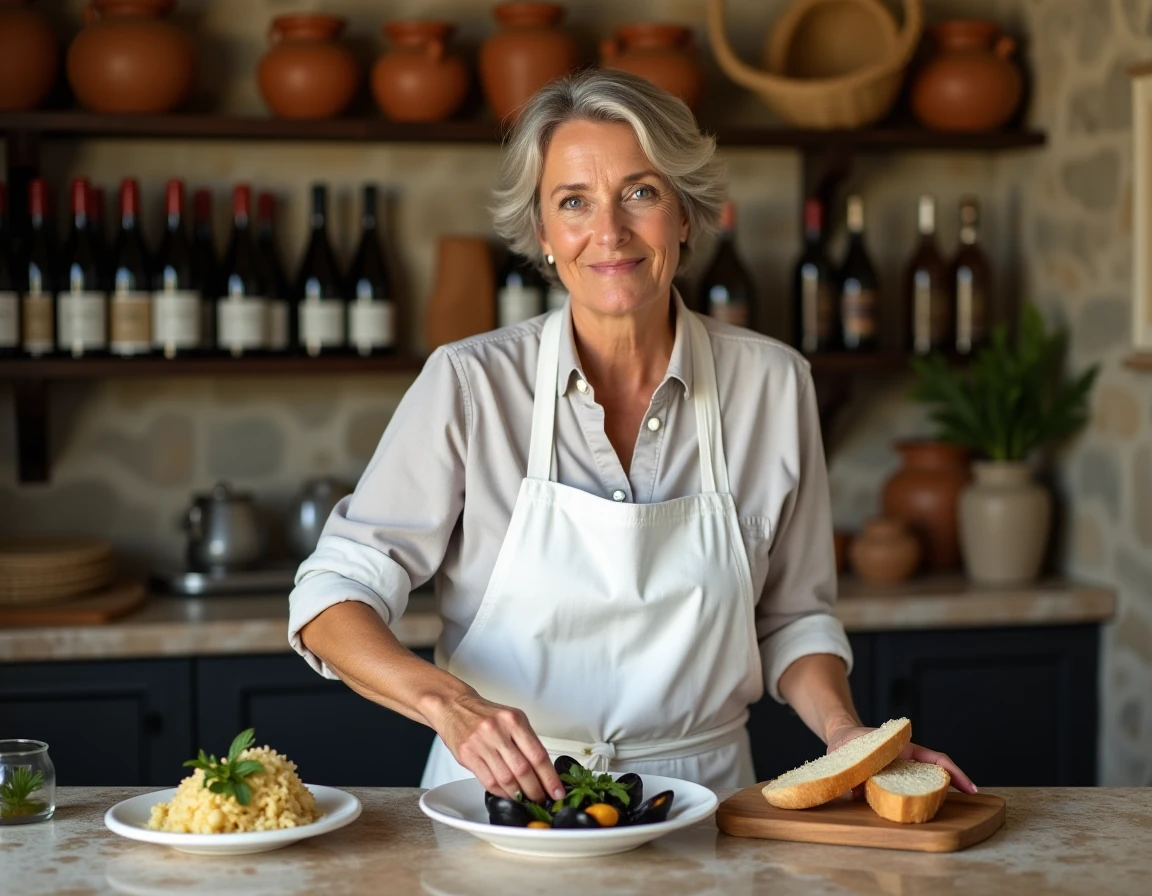
Côte et Plage operates year-round, which fundamentally changes the supply logic. A restaurant open off-season in Gruissan works with reduced deliveries, tighter short supply chains, and a menu adjusted to the rhythm of the seasons. The cuisine is traditional, focused on fresh products, with a wine selection that reflects the local vineyard.
Casa Marina adopts a different positioning: a more pronounced Mediterranean ambiance, service during extended hours, and one of the highest average ratings on review platforms in the municipality. The culinary focus remains rooted in seafood, with a more festive spirit.
We observe that the distinction between these two profiles is rarely made in online guides, which merely list names without qualifying the style of cuisine or seasonality. A reliable criterion for assessing a restaurant in Gruissan is to check if the restaurant remains open between November and March. Those that do depend less on tourist traffic and generally maintain a more consistent product quality.
Indian cuisine in Gruissan: a sign of a diversifying scene
The arrival of Shivaay Indian Cuisine in the Gruissan landscape marks a turning point. Recent reviews mention dishes like baingan bharta, chicken korma, or cheese naans, prepared with a care that contrasts with the typical beach offerings.
This culinary diversification responds to a real local demand, not just tourist-driven. The permanent residents of Gruissan, whose numbers have increased in recent years, are seeking alternatives to grilled fish restaurants. The establishment of an Indian restaurant in a town of this size confirms that the local market is now absorbing non-Mediterranean cuisines.
Reading a restaurant menu in Gruissan: indicators of quality
Several markers allow you to differentiate a quality table from a tourist trap on the Aude coastline:
- Explicit mention of the origin of the fish (Gruissan lagoon, Port-la-Nouvelle fish market) rather than a vague “fresh fish of the day” without provenance.
- Presence of wines from the Clape massif with AOC on the menu, with at least one white reference available by the glass. A restaurant that only offers generic IGP Pays d’Oc wines ignores its terroir.
- Short and updated menu: in Gruissan, a menu with more than twenty dishes almost always indicates a reliance on frozen or semi-prepared products.
- Year-round service or opening in spring: establishments that only open in July-August operate on a volume model that is not compatible with careful local sourcing.
The trap of generic “seafood platters”
The platters displayed out front at fixed prices rarely come from the nearby oyster parks. Gruissan oysters, raised in the lagoon, have a specific size and taste. Asking for the exact origin of the oysters before ordering remains the simplest way to verify the seriousness of an establishment. A restaurateur who works directly with local producers will specify this spontaneously.
Gastronomy in Gruissan is not limited to a beachside atmosphere facing the sea. The foundation of raw products, including salt, lagoon fish, and wines from the Clape, offers a raw material that few seaside resorts in Aude can claim. The addresses that exploit this potential rigorously can be easily identified, provided you look beyond the terrace and the sunset.