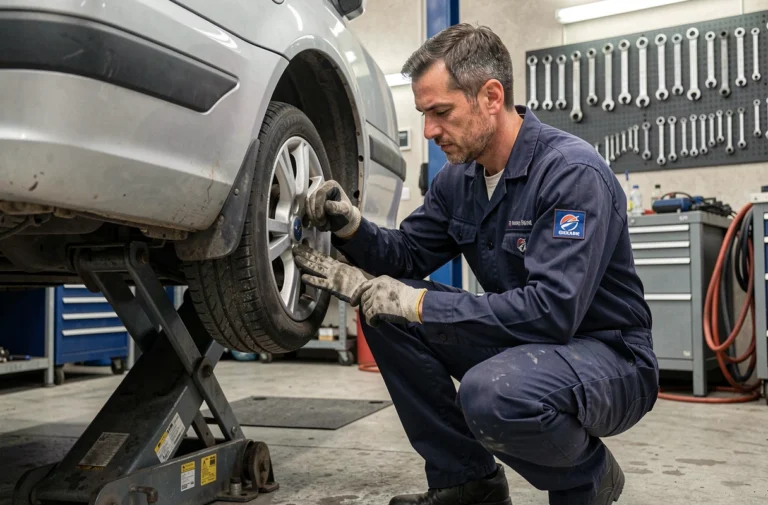
Choosing workwear for a construction site comes down to answering a question that is often overlooked: what risks does the clothing need to protect against, and for which specific tasks?
In its guidance on workplace risk prevention, INRS stresses that protective clothing should be selected based on an assessment of the risks actually identified within the company—not simply purchased as a matter of habit or by trade. Starting with the specific hazard (flying particles, heat, cuts, falling objects) radically changes how you compare two garments.
Workwear and protective clothing on construction sites: two different categories
One point most buying guides overlook is that not all clothing worn on a construction site has the same regulatory status. Workwear (work trousers, work polo shirts) protects personal clothing and helps identify workers. Protective clothing (acid-resistant coveralls, an EN ISO 20471-certified high-visibility vest) is personal protective equipment (PPE) under the French Labour Code.
Confusing the two can lead to buying comfortable clothing that is unsuitable for the risk, or requiring expensive PPE where ordinary workwear would be enough. Before placing an order, checking the product’s stated purpose and accompanying documents (instructions for use, declaration of conformity) is more reliable than judging by appearance or relying on a sales description.
Choosing workwear for the construction industry should therefore start with a review of the risk assessment for each role, rather than a simple comparison of catalogues.
How to select construction workwear based on the type of risk
Comparing two items of construction workwear by fabric or price says nothing about how suitable they are for a particular task. INRS illustrates this in its guidance on sanding: the protection required depends on the type and concentration of dust and the duration of exposure—not on how comfortable the clothing feels.
The table below matches four common types of risk on construction sites with the clothing features to check first.
| Main risk | Typical tasks | Clothing feature to check | Relevant standard or marking |
|---|---|---|---|
| Flying particles and dust | Sanding, cutting, demolition | Tightly woven fabric, adjustable cuffs, closed collar | Workwear (no specific PPE required if the risk is low) |
| Reduced visibility (moving machinery) | Roadworks, earthworks, manoeuvring areas | Retroreflective strips, fluorescent colour | EN ISO 20471 (Class 2 or 3, depending on exposure) |
| Heat or flame hazard | Welding, oxy-fuel cutting | Flame-resistant fabric, no meltable synthetic fibres | EN ISO 11612 (heat and flame) |
| Cuts or abrasion | Handling sheet metal, rebar work | Reinforced forearms, heavy fabric | Check abrasion resistance (Martindale cycles) |
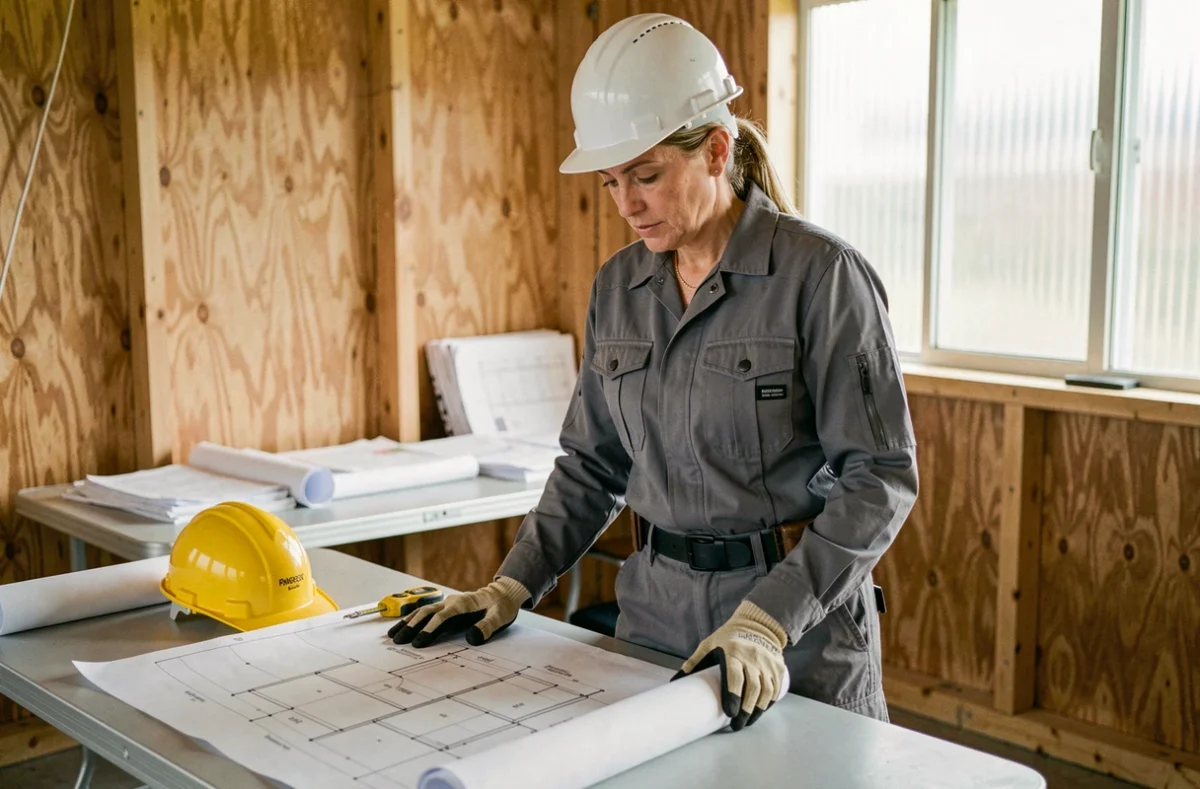
This table shows that the same worker may need two different outfits in a single day if they move from sanding to an area with moving machinery. Buying a single all-purpose outfit often means failing to adequately address any risk.
Construction workwear care: as important a selection criterion as the fabric
Washing and maintenance instructions matter just as much as the material when it comes to the lifespan of construction workwear. Even durable fabric can lose its mechanical properties if washed at too high a temperature. A high-visibility vest whose retroreflective strips peel off after a few wash cycles no longer provides effective protection.
- Before buying, check how many industrial wash cycles the manufacturer guarantees before performance (durability, visibility, flame resistance) begins to deteriorate.
- Compare annual maintenance costs (industrial or domestic washing, replacement frequency), not just the purchase price per item.
- Avoid garments whose instructions for use do not specify maintenance requirements, because without care instructions, it is impossible to know when the clothing is no longer compliant.
Factoring in maintenance from the outset helps avoid discovering six months later that cheaper trousers cost more because they need replacing twice as often.
Construction safety standards: check the markings before comparing prices
Standards for construction workwear are becoming increasingly numerous. Not all of them apply to construction, and some garments display pictograms unrelated to the risks found on a typical building site.
- EN ISO 20471: high visibility, with three classes based on the minimum area of fluorescent and retroreflective material.
- EN ISO 11612: protection against heat and flame, with performance codes (A1, B1, C1, etc.) specifying each type of thermal hazard.
- EN 13034: protection against splashes of liquid chemicals, useful for certain treatment or waterproofing tasks.
- EN 343: rain protection, classified by resistance to water penetration and breathability.
A garment certified to EN 343 (rain protection) does not protect against chemical splashes, even if it is waterproof. Each standard covers a specific risk, not a particular trade. Checking the CE marking and the manufacturer’s instructions is the only reliable way to find out what the garment actually protects against.
When clothing is not enough
INRS points out that clothing never replaces other preventive measures (ventilation, source extraction, site organisation). For example, on a sanding job, a closed coverall limits skin exposure to dust, but without local extraction, the respiratory tract remains exposed. Clothing is one link in a chain of protective measures, not the only one.
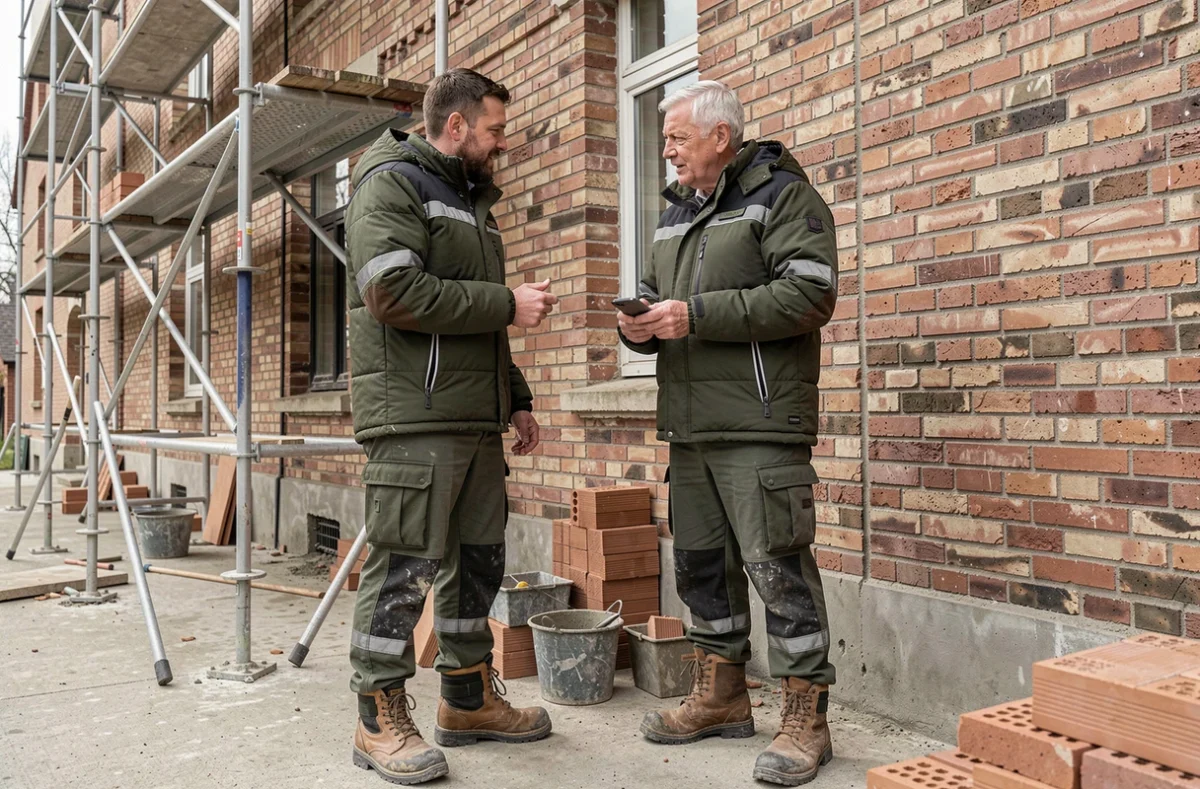
Choosing workwear for a construction site comes down to three checks: identify the actual risk associated with the job, confirm that the garment’s markings cover that risk, and make sure its care requirements allow that protection to be maintained over time. A garment whose compliance cannot be guaranteed after washing is no longer protective clothing.