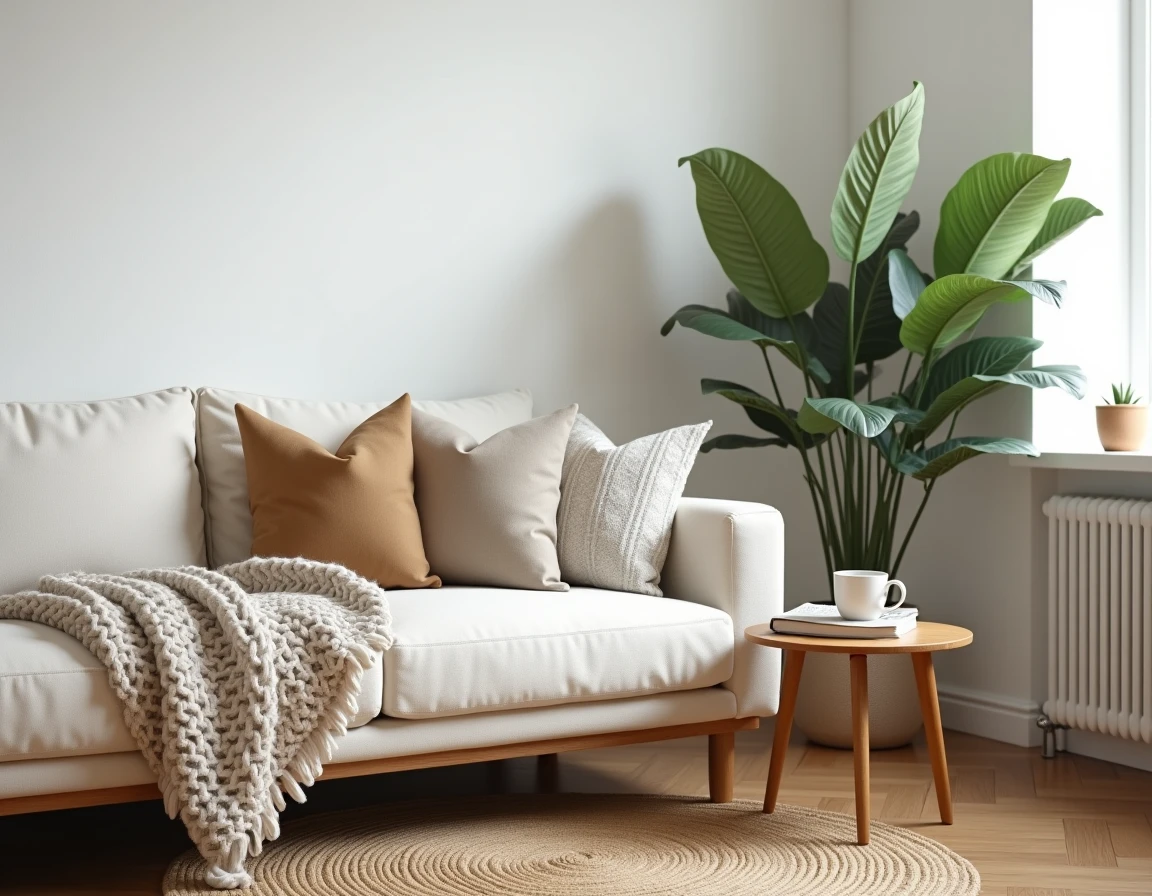
Enhancing an interior decoration goes beyond just choosing a beautiful sofa or repainting a wall. Recent trends show that decorative choices now involve criteria of modularity, health, and sustainability that surpass mere aesthetics. What levers produce a visible change in an interior, and which ones are merely decorative gadgets with no real impact on daily life?
Modular decoration or fixed decoration: what truly changes the use of a room
Recent housing barometers highlight a significant trend: modularity now takes precedence over pure aesthetics. Hybrid spaces (office-living room, bedroom-gym, discreet video call corner) have become a design criterion in their own right, not just a simple adjustment.
Most competing articles approach interior decoration from the angle of “pretty.” They recommend cushions, throws, and plants. These elements have their place, but they do not address the main constraint of a contemporary interior: the same space must serve multiple functions throughout the day.
A wheeled piece of furniture that serves as a separator in the morning and a console in the evening alters the perception of a room more than a new light fixture. A foldable acoustic textile partition transforms an open living room into a functional office for a video conference. Exploring interior decoration with Maisons Euro France allows you to identify solutions that combine design and modularity without sacrificing one for the other.
| Decorative lever | Aesthetic impact | Functional impact | Relative cost |
|---|---|---|---|
| Wall paint | High | Low | Moderate |
| Modular furniture | Medium | High | Variable |
| Ambient lighting | High | Medium | Low to moderate |
| Removable partition / acoustic textile | Medium | High | Moderate |
| Indoor plants | Medium | Low | Low |
This table highlights a frequent discrepancy: decorative articles overvalue levers with high aesthetic impact (paint, lighting) and underestimate those that transform the actual use of the space.
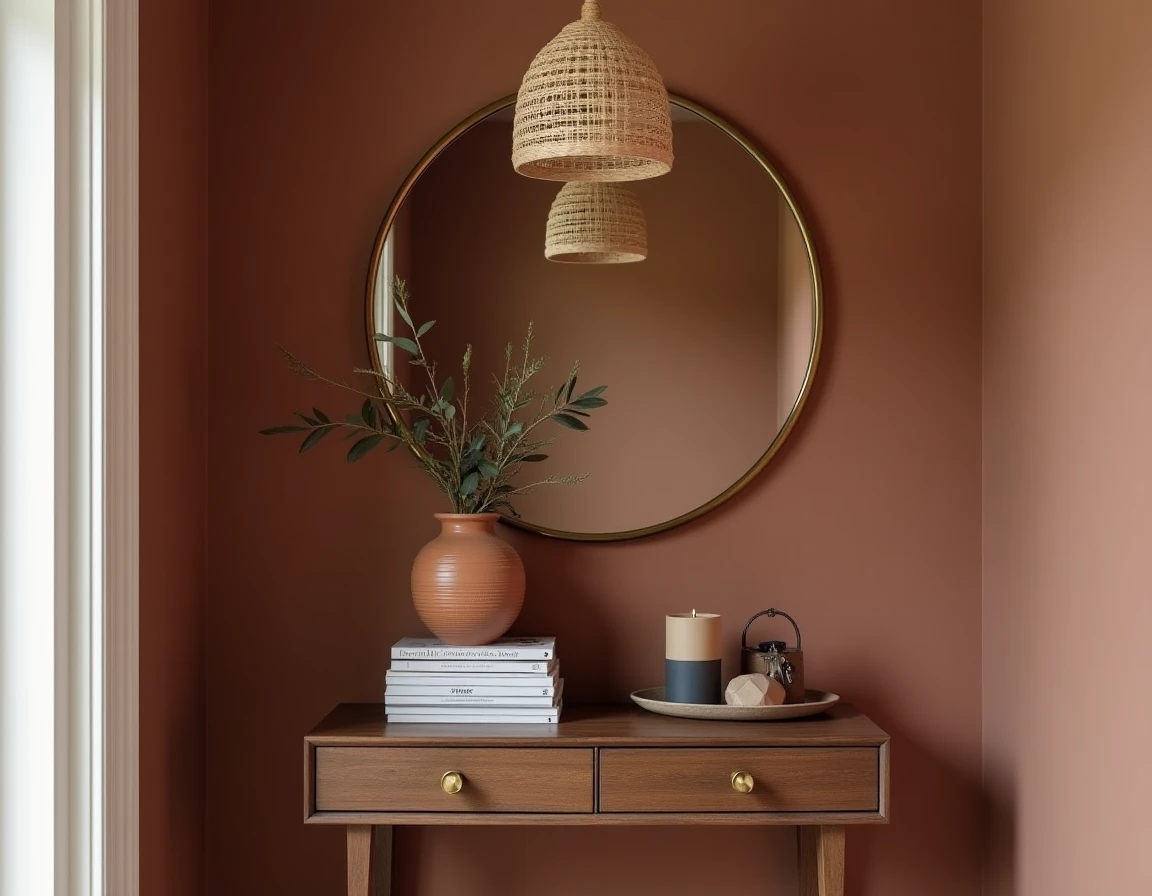
Low VOC paints and indoor air quality
Specialized press in interior architecture has emphasized in recent years a growing consideration of health in decorative choices. Among the concrete points, the choice of paint comes first.
Conventional paints emit volatile organic compounds (VOCs) for several weeks after application. Choosing low-emission paints does not alter the visual finish, but it changes the quality of the air breathed daily, a parameter that affects sleep and overall comfort.
Selection criteria for paint for interior decoration
- Check the emission class label (class A+ corresponds to the lowest emissions on the French market)
- Prefer formulations without petrochemical solvents, including for often-overlooked undercoats
- Test the shade on a wall sample exposed to the room’s natural light, as colors change radically depending on orientation
Color remains a powerful decorative lever. However, a shade chosen solely on a screen or in-store often leads to disappointment once applied. The orientation of the room (north, south) significantly alters the perception of a sage green or terracotta.
Sustainable decoration and second-hand: going beyond the low price argument
Competing content sometimes mentions recycling or DIY as “low budget” tips. The trend goes further. “Low impact” decoration now structures an entire market segment: recovery, upcycling, furniture rental, repair rather than replacement.
Second-hand platforms like Selency or Leboncoin have become full-fledged decor sourcing channels, not fallback solutions for small budgets. They offer vintage furniture whose patina provides a uniqueness that no new piece can replicate.
Upcycling and short circuits for a unique interior
Recovering a thrifted dresser and repainting it with bio-sourced paint combines two current trends: personalization and reducing environmental impact. This type of approach produces a unique piece of furniture, which immediately differentiates an interior from the uniformity of catalogs.
Local flea markets and recycling centers also offer decorative objects (frames, ceramics, lighting) at prices much lower than new. The irregularity of an old object creates a visual texture that standardized industrial objects cannot provide.
Natural light and artificial lighting: deciding based on the room
Optimizing natural light is a recurring theme in all decor articles. What is often missing is the distinction between rooms where natural light should be maximized and those where it should be controlled.
A south-facing living room benefits from abundant lighting, but an excess of direct light fades textiles and overheats the space in summer. Linen filtering curtains, more than a classic sheer, allow for a balance without darkening.
For blind or poorly oriented rooms, indirect lighting positioned high visually enlarges the space much more than a central ceiling fixture. LED strips installed behind a piece of furniture or under a shelf create a depth that table lamps cannot produce.
- North-facing room: favor warm shades on the walls and low color temperature lighting (golden tones)
- South-facing room: opt for filtering textiles and cool colors to balance brightness
- Room without a window: combine indirect lighting around the perimeter and mirrors placed facing light sources
The mirror remains an underutilized tool. Placed facing a window or perpendicular to a light source, it redistributes light at no energy cost. Randomly placed, it merely reflects an empty wall.
Interior decoration gains coherence when each choice, from furniture to paint to lighting, responds to a concrete use and not just a visual trend. An interior that functions daily ages better than one that seeks to replicate a magazine photo.