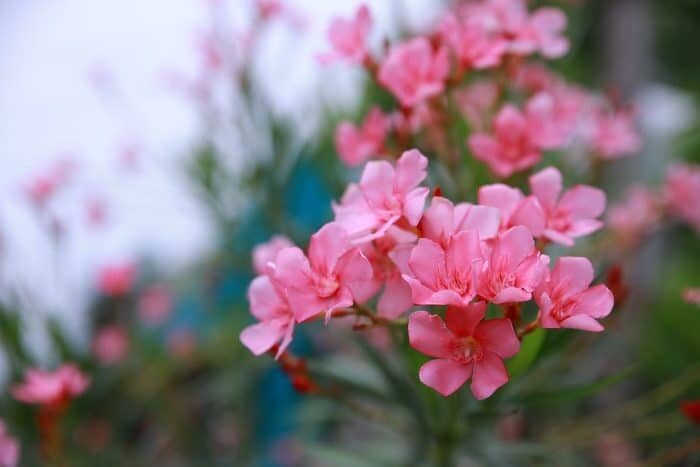
The oleander, a charming ornamental plant, often falls victim to diseases that hinder its flourishing. These afflictions, ranging from root rot to powdery mildew, can be devastating if not treated in time. You must identify them to intervene effectively. In this regard, this discussion will focus on the most common diseases of oleander and their solutions. Gardening enthusiasts and oleander lovers will find valuable information here to help their plants thrive despite these potential threats.
Oleander: a plant with mysterious origins
In the plant world, disease symptoms are not always easy to detect. One of the most common warning signs for a popular variety like oleander is a notable color change in its leaves, usually emerald green, to a dull and bland hue: yellow. Yes, you read that right • ‘oleander yellow leaves’. This is certainly not a pleasant sight for any horticulture enthusiast.
The presence of ‘oleander yellow leaves‘ can be attributed to several factors. On one hand, it could simply be a lack of water or essential nutrients such as nitrogen, phosphorus, and potassium that are necessary to maintain the vibrant colors typical of oleander. If this is the case, be sure to water your plant regularly and consider additional fertilization specifically designed for outdoor plantings.
On the other hand, this phenomenon could also signal the presence of harmful pathogens such as various types of fungi or pests that often attack these shrubs during warm and humid months. Fungal infections such as powdery mildew can cause your robust oleander plants to pale until they turn into ‘oleander yellow leaves‘.
It is therefore imperative to take preventive measures to avoid any undesirable spread. Ensure that there is enough space between each shrub to allow for adequate air circulation, thus limiting any chance for potential stubborn fungal spores to thrive.
If you already observe this unfortunate color transition of your dear oleanders to the dreaded “oleander yellow leaves” formula, all hope is not lost! There are effective curative solutions available in the modern horticultural market specifically designed to counter these invisible yet harmful enemies. From environmentally friendly biological treatments to conventional chemical sprays • choose your defense according to your own beliefs.
‘Oleander Yellow Leaves’ can certainly be an alarming term as we instinctively associate this hue with diseases and desolation; that said, with diligent vigilance, in-depth knowledge, and timely interventions, even this formidable adversity can be overcome without too much trouble or effort.
Common diseases of oleander: what dangers
In the plant universe, the warning signals of disease can be subtle. For oleander, a favorite plant among gardening enthusiasts, a notable change in leaf color is a symptom to watch closely: yellowing. If you notice your usually emerald leaves displaying a dull and discolored hue, be sure to examine them carefully for this alarming manifestation.
The phenomenon of ‘oleander yellow leaves’ can have several possible origins. It may simply be a lack of water or essential nutrients such as nitrogen, phosphorus, and potassium, which are necessary to maintain the characteristic vibrance of oleander colors. In this case, be sure to water your plant regularly and consider additional fertilizers specifically designed for outdoor plantings.
Symptoms of oleander: knowing how to detect them in time
The most common disease in oleander is powdery mildew, a fungal infection that manifests as a white powdery coating on the leaves. This disease often occurs when climatic conditions are warm and humid, thus favoring the spread of the fungus responsible for powdery mildew. To prevent this disease, be sure to provide good air circulation around your plant by spacing the branches adequately and avoiding excessive shaded areas.
Another frequent cause of diseases in oleander is the presence of harmful insects such as aphids or scale insects. These small creatures cling to the stems and leaves of the oleander, sucking its sap and causing a general weakening of the plant. To combat these unwanted infestations without resorting to harmful chemicals, you can use natural remedies such as insecticidal soap diluted in water or a mixture of essential oil/water.
You should also remain vigilant against certain viruses that can infect oleander. The flower bud drop virus, for example, can lead to a significant decrease in flowering in your shrub. A good practice is to promptly remove any affected flower buds to prevent this virus from spreading further in your garden.
In this article, keep in mind that prevention remains the best way to combat diseases in oleander. Regular maintenance including proper pruning, adequate watering, and balanced fertilization will ensure the optimal health of your plant. If in doubt or if alarming persistent symptoms are present, do not hesitate to consult a gardening professional who can guide you in the appropriate treatment for your specific situation.
Understanding the causes of oleander diseases
When it comes to treating oleander diseases naturally, there are several options to consider. The use of plant-based purées and decoctions can be beneficial. For example, nettle purée is known for its insecticidal and fungicidal properties. Simply soak nettle leaves in water for a few days, then strain the resulting liquid before using it as a spray on the infected parts of the oleander.
Some essential oils can also be used as a natural treatment against oleander diseases. Lavender essential oil, for example, is renowned for its antiseptic and antimicrobial properties that help combat fungal or bacterial infections. Diluted in a carrier oil such as sweet almond or applied directly in diluted form to the affected areas, it can help soothe symptoms related to diseases.
Do not underestimate the preventive power of proper cultural practices to maintain a healthy environment for your oleander. First, ensure good soil hygiene by regularly removing all unwanted weeds that could harbor pests or promote the development of foliar diseases.
Make sure your plant receives regular watering but without excess. Constantly moist soil can lead to root rot problems or diseases related to excess moisture.
Finally, remember that the health of oleander is closely linked to its environment and natural resistance. Therefore, provide the optimal conditions necessary for your plant’s proper development: a sunny location, well-drained soil rich in organic matter, and regular attention to quickly detect any signs of disease. With these natural treatments combined with a preventive approach, you can keep your oleander healthy while preserving the ecological balance of your garden.
Natural treatments for sick oleander
As part of the prevention and maintenance of oleander, be sure to consider some crucial aspects. Choose disease-resistant varieties to reduce the risk of infections. Consult a specialized nursery to learn about the best options available on the market.
Adopt a proactive approach by regularly monitoring the condition of your oleander. Carefully inspect the leaves, stems, and flowers for signals indicating a potential disease. Be particularly vigilant for abnormal changes in their appearance: discoloration, suspicious spots, or deformities.
Pruning also plays a crucial role in preventing oleander diseases. Perform regular pruning to maintain a compact and airy shape for your plant. This will not only improve its overall health but also promote better air circulation between the branches, thus limiting the risk of fungal infections appearing or spreading.
When pruning your oleander, always use clean, sharp tools to avoid any cross-contamination between different parts or plantings in the garden. Disinfect your tools with an appropriate product after each use to ensure their cleanliness.
Another important point in oleander maintenance is its proper fertilization. Provide it with a balanced fertilizer specially formulated for potted plants or flowering shrubs. Strictly follow the application recommendations, as excessive fertilization can weaken the plant and make it more vulnerable to diseases.
Do not forget the importance of appropriate irrigation. Water your oleander regularly but without excess. Avoid stagnant moisture around the roots that could promote the development of pathogenic fungi.
Prevention and maintenance: the keys to keeping oleander healthy
Beyond prevention, be sure to identify and treat the diseases that can affect oleander. Among the most common afflictions are powdery mildew and root rot.
Powdery mildew, caused by a microscopic fungus, manifests as a white powdery coating on the leaves of oleander. To combat this disease, you can resort to specific fungicidal treatments available commercially. Be sure to follow the usage instructions carefully to avoid any risk to your health or that of your pets.
As for root rot, it is generally due to prolonged excess moisture around the roots of oleander. To remedy this problem, ensure that your plant is planted in well-drained soil and avoid excessive watering. If you already notice an advanced infection of root rot, it may be necessary to gently remove the affected plant and replant your oleander in fresh soil.
In case of severe infection or if you have difficulty precisely identifying the exact cause of the symptoms observed on your plant, it is recommended to seek the services of a gardening or horticulture professional specialized in treating plant diseases. They will be able to make an accurate diagnosis and propose a solution tailored to the problem encountered.
Although oleander can be subject to various diseases, it is possible to prevent and treat these afflictions by adopting good cultural practices. Following preventive measures such as choosing disease-resistant varieties, regular and clean pruning, and balanced fertilization will greatly contribute to keeping your plant healthy. In case of confirmed infection, do not hesitate to resort to appropriate fungicidal treatments or consult a professional for an accurate diagnosis and a suitable solution. With proper maintenance, your oleander will be a source of beauty in your garden for many years.