
Your pool water seems fine on paper, the chlorine is at the right level, the filtration is running, yet a milky veil persists. This stubborn haze often comes from micro-particles too fine to be captured by the filter. Clarifier exists to solve this specific problem. However, combining it with chlorine without a method can cancel the effect of both products, or even create a gelatinous deposit that is difficult to remove.
The role of pH when combining chlorine and pool clarifier
Before discussing dosage or timing, one parameter conditions everything else: pH. Chlorine added to water with a pH that is too high loses most of its disinfecting power. A polymer clarifier added to this same water risks precipitating in gel form instead of agglomerating the suspended particles.
Have you ever noticed a viscous deposit on the walls or in the skimmer after a treatment? This is often a sign that the pH exceeded the compatibility zone at the time of addition. Keep the pH between 7.0 and 7.4 before any combination of chlorine and clarifier. This is not an indicative range; it is the threshold beyond which the chemical reactions between the two products become unpredictable.
The best practice is to test and correct the pH first, then wait for the value to stabilize before adding anything else to the pool. To properly combine chlorine and clarifier in the pool, this preliminary step is non-negotiable.
Stabilizer and chlorine: the trap that blocks the clarifier
Stabilized chlorine tablets contain cyanuric acid. This stabilizer protects chlorine from UV rays, but it accumulates in the water over the weeks. When its concentration gets too high, the available free chlorine drops, even if the test strips show a correct total chlorine level.
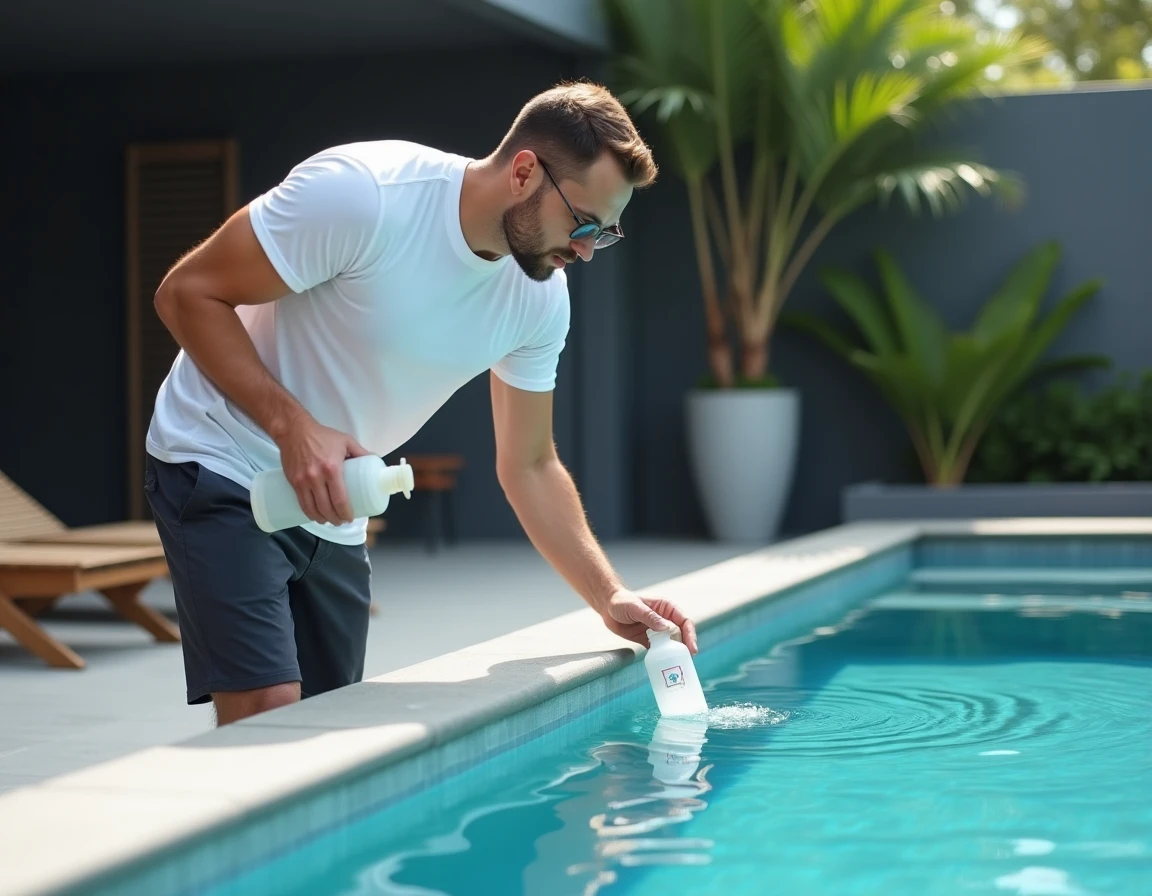
The problem for the clarifier is indirect but real. An excess of stabilizer makes chlorine ineffective against microscopic algae. These algae continue to cloud the water, and the clarifier ends up agglomerating living organic particles that the neutralized chlorine no longer destroys. The result: water that remains cloudy despite repeated doses of clarifier.
Before combining the two products, check the stabilizer level. If the concentration is very high, a partial water replacement of the pool is the only solution to lower this level. No chemical product degrades cyanuric acid once dissolved.
Aluminum-free clarifiers: why this choice changes the game
Old flocculants based on aluminum sulfate pose a double problem. They are incompatible with cartridge filters (the deposit clogs the cartridge irreversibly). And health authorities, notably ANSES since 2022, have strengthened recommendations to reduce aluminum inputs in water, including for non-food use.
New-generation cationic polymer clarifiers address these two limitations:
- They work with all types of filters (sand, cartridge, diatomaceous) without the risk of sudden clogging.
- They tolerate high free chlorine levels, including those reached during a shock treatment, as long as the pH remains in the 7.0-7.4 range.
- They leave no metallic residues in the pool water, simplifying maintenance throughout the season.
Organic clarifiers compatible with shock treatment represent a real change compared to traditional flocculants. If your filter is a cartridge type, this type of product is the only one to consider.
Order of addition and waiting time between chlorine and clarifier
The timing question is the one that generates the most errors. Pouring the clarifier at the same time as the shock chlorine in the pool amounts to wasting both products. High-concentration chlorine can degrade some polymers before they have time to act on the suspended particles.
Here is the sequence that works:
- Correct the pH and let it stabilize for a few hours, with filtration running.
- Perform the shock treatment with chlorine. Keep the filtration running continuously until the free chlorine level drops back to the normal maintenance range.
- Add the clarifier once the chlorine peak has passed. The clarifier acts after the shock, not during.
- Keep the filtration running continuously for at least 24 hours after adding the clarifier.
This sequence allows the chlorine to first destroy organic matter (algae, bacteria), then the clarifier to gather the residual debris so that the filter can capture it. Reversing the order or mixing everything cancels the benefit of both treatments.
Continuous filtration: the factor that dosage alone cannot replace
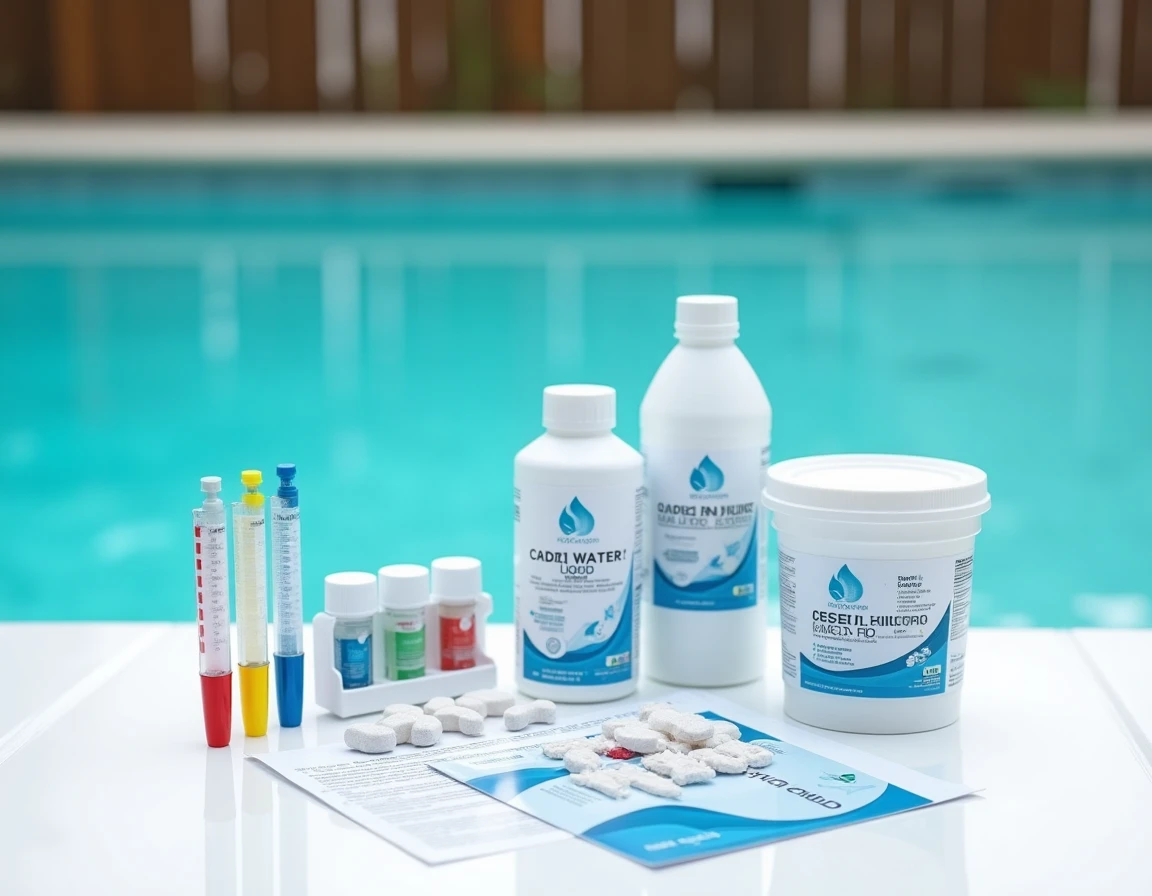
A clarifier, even perfectly dosed and added at the right time, is useless if the filtration stops. Its role is to agglomerate fine particles into larger clumps. Without regular water passage through the filter, these clumps remain suspended and the water retains its cloudy appearance.
After adding the clarifier, the filtration must run without interruption. Not a few hours a day as in routine, but continuously for a complete cycle. Cleaning or backwashing the filter should occur after this cycle, not before, to remove trapped particles.
If your water remains cloudy after 48 hours of continuous filtration and correct dosing, the problem likely does not come from the clarifier. Check the condition of the filter media (worn sand, clogged cartridge) or a persistent chemical imbalance, such as an excess of stabilizer mentioned earlier.
The chlorine-clarifier combination works when each product acts in its slot and the filtration does the mechanical work between the two. The clarifier does not replace effective filtration, it complements it. A well-maintained filter and controlled pH remain the two pillars of clear water, well before the choice of brand or format of the clarifier.