Heating represents the largest energy expense in a home. Reducing your heating bill does not always require changing the boiler or undertaking insulation work: in a rental or an apartment with collective heating, these options are often out of reach. The accessible levers then focus on adjustment, behavior, and contractual choices.
Reduce your heating bill without renovation in a rental
In a rented property, the tenant has no control over insulation or the heating system. The scope for action is concentrated on three areas: the set temperature, the management of openings, and the use of existing equipment.
Lowering the temperature by a few degrees in living areas has a direct effect on consumption. The recommendations from Ademe suggest comfort around 19 °C in the living room and between 16 and 17 °C in the bedrooms. This difference between rooms assumes the ability to adjust each radiator individually, which is the case with even basic thermostatic valves.
In collective heating, the tenant does not control the supply water temperature. However, they can partially close the valves in less occupied rooms and never cover a radiator with furniture, a thick curtain, or laundry. A blocked radiator heats the object in front of it more than the ambient air in the room.
Solutions compared by energy type and housing profile are detailed on chauffage-economique.com, particularly to assess the actual cost per kilowatt-hour of heat delivered rather than per kilowatt-hour of energy purchased.

Programmable thermostat and temperature control
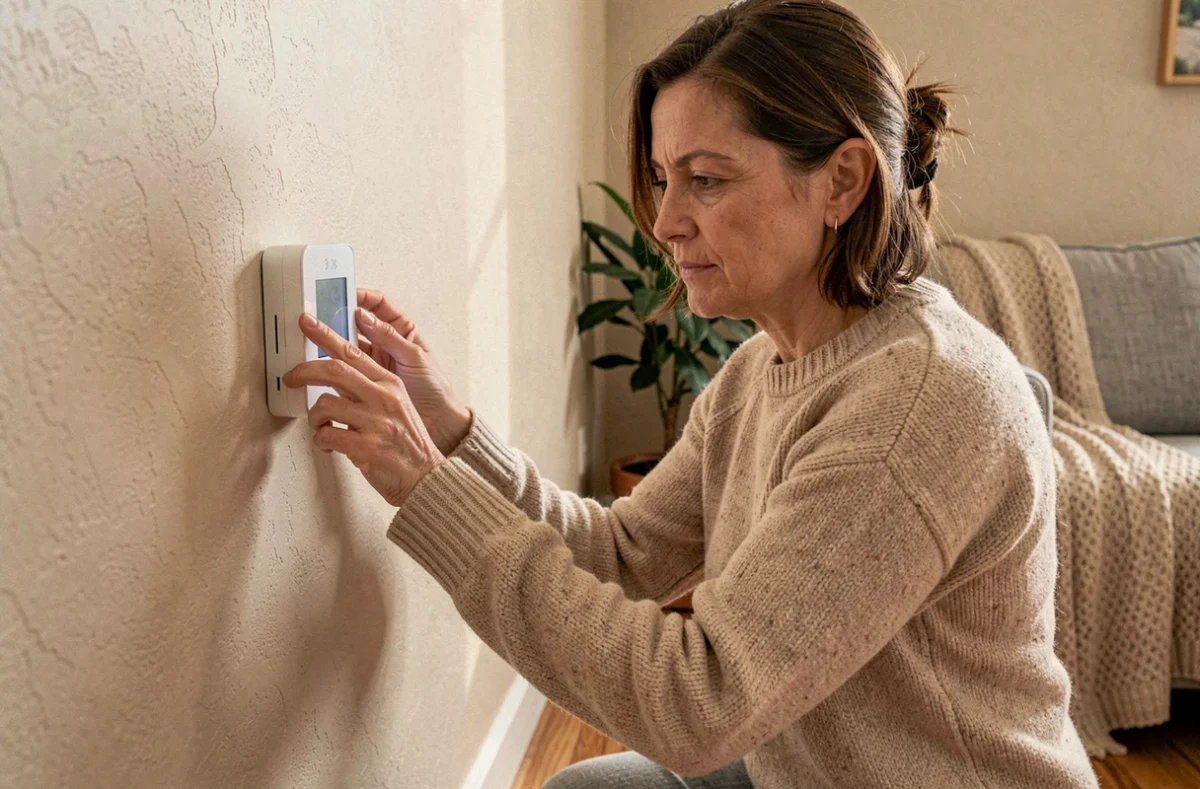
A programmable thermostat adjusts heating according to actual presence hours in the home. Instead of heating continuously, it lowers the set point at night and during absences, then restarts the system before the occupants return.
There are three main types of thermostats:
- The wired thermostat, the simplest, connected directly to the individual boiler. Its installation only requires a basic electrical connection.
- The wireless thermostat, which communicates via radio frequency with a receiver placed on the boiler. It can be installed without drilling walls, making it suitable for rentals.
- The connected thermostat, controllable from a smartphone. Some models detect when a window is opened or when there is a prolonged absence to automatically turn off the heating.
On an older individual boiler, even an entry-level thermostat prevents unnecessary heating cycles. Energy savings mainly depend on the hourly programming, not on the price of the device. A thermostat set to maintain 16 °C for eight hours a day (combined night and absence) significantly reduces consumption compared to constant operation at 19 °C.
Gas contract and price volatility: an underestimated lever
The price of gas experiences significant monthly volatility. The increase recorded on October 1, 2026, reminded us that the type of contract can weigh as much on the bill as the volume of consumption itself.
Fixed price or indexed price
A fixed-price contract concluded during a period of low rates protects against seasonal increases. Before changing offers, three elements deserve verification: the price per kilowatt-hour actually stated in the contract, the duration of the price guarantee, and any early termination fees.
Offers indexed to the reference price follow monthly variations. They can be advantageous when the market drops but expose the budget to unpredictable spikes in mid-winter. For a gas-heated home with an old boiler, the budget stability of a fixed contract often represents a more tangible gain than a few cents difference on the spot price.

Limit heat loss without undertaking insulation work
Heat losses do not only come from poorly insulated walls. A significant portion of heat escapes through points that the tenant can address with simple means.
- Worn window seals allow a constant draft of cold air. Adhesive foam or silicone seals can be installed in minutes and removed without damaging the frame.
- The bottom of the front door, often overlooked, creates a draft at floor level. A door snake or an adhesive door bottom reduces this infiltration.
- Roller shutter boxes are frequent thermal bridges. A thin insulating material cut and slipped inside the box limits exchanges without altering the structure.
- Ventilation remains necessary to expel humidity (humid air requires more energy to be heated), but five to ten minutes with windows wide open is sufficient without cooling the walls deeply.
Real cost of heating: thinking in kilowatt-hours of heat
Comparing energies by their gross price per kilowatt-hour gives a misleading picture. A heat pump consumes one kilowatt-hour of electricity to deliver several kilowatt-hours of heat. A classic electric radiator delivers exactly one kilowatt-hour of heat per kilowatt-hour consumed. Gas burned in a recent condensing boiler achieves an efficiency close to one, while an old boiler may lose a significant portion of the purchased energy.
This distinction between purchased energy and heat actually delivered to the home alters the apparent ranking of solutions. It explains why the heat pump tops cost comparisons, ahead of pellets and gas. For a tenant stuck with an old system, calculating the actual efficiency of their boiler helps estimate the potential savings accessible through adjustments alone.
Thus, this winter’s heating bill depends as much on behavior and the contract as on the installed system. Checking seals, programming the thermostat, and reviewing the pricing conditions of the gas supplier are three actions that can be accomplished in a weekend, even in a property that one does not own.