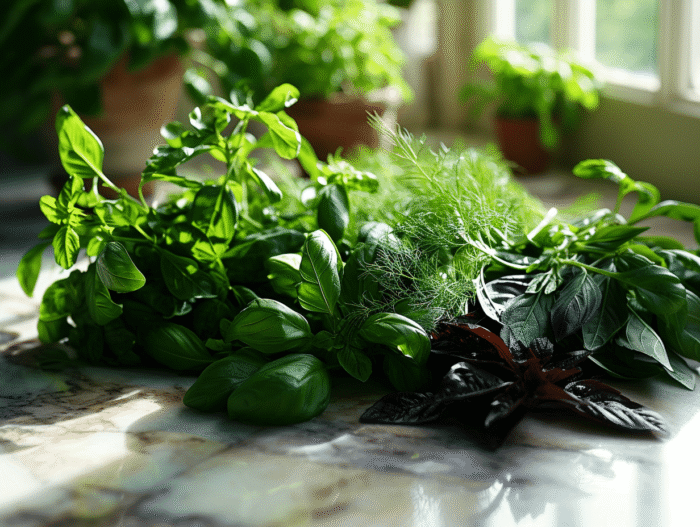
Fresh herbs play an essential role in culinary art, bringing a touch of freshness and aroma that can transform an ordinary dish into a memorable tasting experience. They have been used since antiquity for their flavor properties, but also for their health benefits. Parsley, cilantro, basil, mint, and thyme, among others, are staples in kitchens around the world. These delicate yet powerful plants have the ability to enhance the taste of dishes, elevate flavors, and create harmony on the palate, while also adding an attractive visual dimension to meals.
Fresh Herbs and Their Culinary Benefits
At the heart of gastronomic innovation, fresh herbs are much more than simple garnishes. They are the undisputed allies of a cuisine that aims to be both flavorful and beneficial for health. Rich in vitamins and antioxidants, fresh herbs like basil, cilantro, and parsley contribute to strengthening the immune system. Indeed, these little wonders of nature bring an undeniable punch and color to dishes, while infusing them with significant nutritional richness.
The benefits of fresh herbs in cooking go beyond their nutrient contribution. Their distinctive aromas and freshness can transform a basic culinary preparation into a refined and sought-after dish. L’Entracte Gourmand, a famous restaurant in the capital, has made this its signature by incorporating these herbs into recipes that blend tradition and inventiveness, thus proving that aromatic herbs have a prominent place in the kitchen.
The market gardeners, essential suppliers of these culinary treasures, are committed to providing quality fresh herbs. The close relationship between chefs and local producers is a trend that is gaining momentum, ensuring the use of fresh, seasonal products. Basil and parsley, the stars of summer, find their way onto plates, bringing their characteristic freshness to summer dishes. Fresh herbs, far from being mere condiments, play a predominant role in the preparation of dishes. They are a health asset and an endless source of inspiration for cooks. By their ability to transcend flavors, they invite a constant rediscovery of palates while providing undeniable nutritional benefits.

Techniques and Tips to Enhance Your Dishes with Fresh Herbs
The use of fresh herbs in cooking is an art that requires finesse and precision. For hot dishes, the trick lies in adding them at the end of cooking to preserve the integrity of their flavor and aroma. Herbs such as thyme or rosemary blend beautifully into stews and braises, releasing their fragrance without being altered by heat. In contrast, for cold dishes, freshness is essential even outside of the season.
As for recipes, each fresh herb has its specialty. Basil, the king of summer, is featured in pesto, pizzas, and salads. Thyme pairs wonderfully with stews and stuffing. Rosemary leaves its mark on roasts and soups, while mint refreshes cocktails and spring rolls. Let’s not forget oregano, essential for pizzas and pasta, parsley, which works wonders in garlic butter or salads, cilantro, indispensable in curries or soups, tarragon, which shines in béarnaise sauce and dressings, or sage, which enhances meats and roasted squash.
Market gardeners, these guardians of the earth, are the inexhaustible suppliers of these fresh herbs. They play a crucial role in supplying kitchens, where herbs are invited to enhance, flavor, and color our plates. Their work produces herbs of optimal freshness, capable of awakening our senses and transforming our culinary experiences.